Table of contents
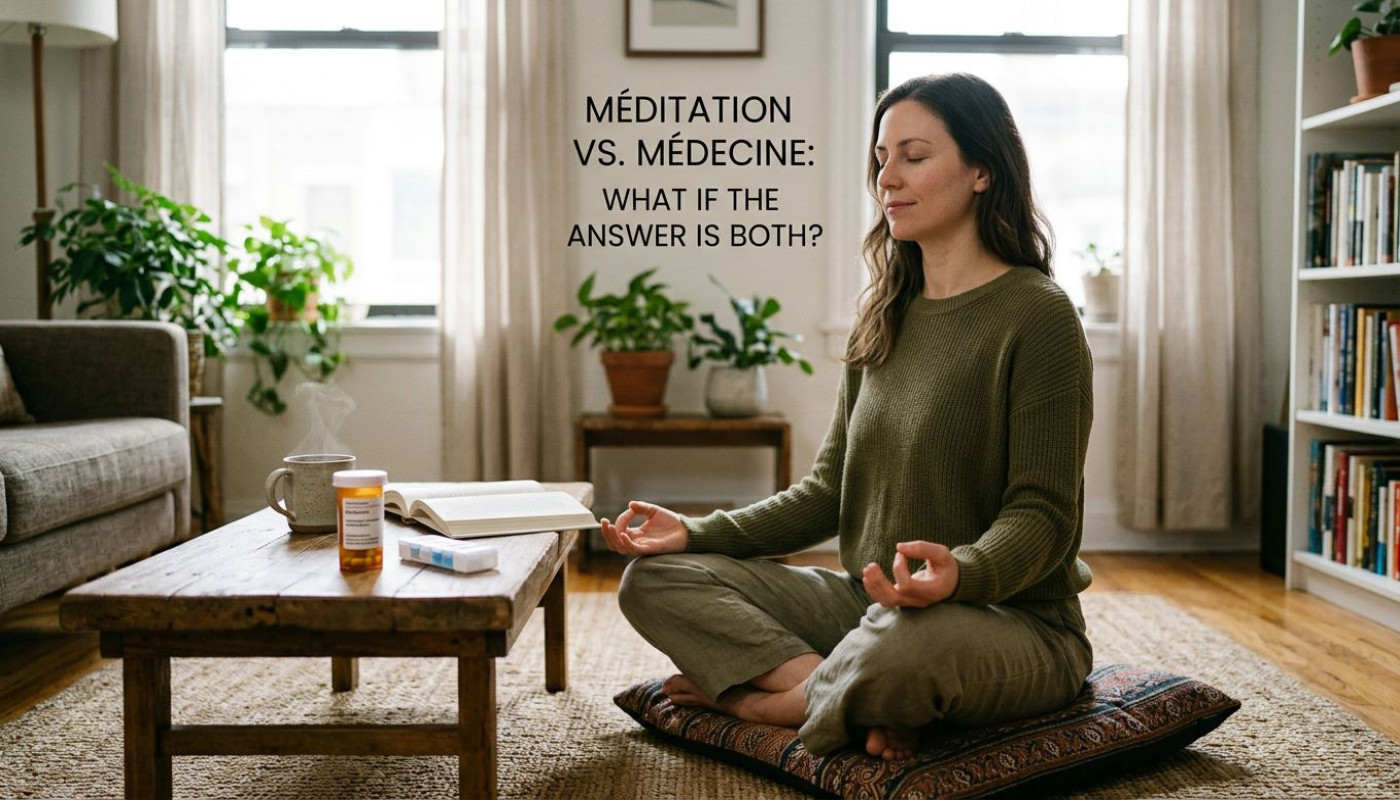
In clinics from Boston to Berlin, “mind-body” is no longer a slogan but a line item, as hospitals add mindfulness sessions, researchers map meditation’s effects on inflammation, and patients compare breathing exercises with prescriptions. Yet the most interesting shift is not a battle between incense and ibuprofen, it is the growing recognition that people often mix approaches anyway, especially when stress, chronic pain, and burnout collide. The question now is not which side wins, but how to combine tools without losing rigor, safety, or common sense.
Hospitals test mindfulness, not miracles
Can a practice rooted in ancient traditions survive the fluorescent light of modern medicine? Over the past two decades, it has not only survived, it has been measured, standardized, and increasingly reimbursed, at least in parts of the system. In the United States, mindfulness-based interventions are now common inside large academic centers, and the flagship model, Mindfulness-Based Stress Reduction (MBSR), has been studied across conditions ranging from anxiety to chronic pain. The evidence is not uniform, but it is substantial enough that major institutions keep investing, and for a simple reason: stress is a risk multiplier, and anything that safely reduces it can change outcomes downstream.
What does the data say when the hype is stripped away? Large evidence syntheses published in peer-reviewed journals have found small-to-moderate improvements for anxiety, depression, and pain-related quality of life, and these effects often resemble what is seen with other first-line nonpharmacological options. Meditation is not an antibiotic, and it does not “cure” autoimmune disease, but it can reduce symptom burden for some patients, particularly when the driver is stress physiology, rumination, insomnia, or the cycle of pain and fear. Researchers have also explored biological correlates, including changes in markers like C-reactive protein and certain immune parameters; results vary, yet the overall direction supports a plausible pathway: less chronic stress signaling, better sleep, and improved self-regulation.
Clinicians, for their part, tend to frame meditation as an adjunct rather than an alternative. That framing matters, because it keeps the promise realistic and the risks low, and it also explains why hospitals can offer mindfulness without endorsing spiritual claims. A cardiology department can recommend meditation to lower perceived stress and improve adherence to lifestyle changes, and a cancer center can offer guided practices to help patients tolerate treatment, all while staying inside the boundaries of evidence-based care. If the modern medical system is willing to test meditation, it is not because it has embraced mysticism, it is because it has learned, often the hard way, that pills alone do not address the mental load patients carry.
When medicine falls short, people look elsewhere
What happens when scans look “normal” but the person still feels unwell? This is the grey zone where many patients begin to assemble their own toolkits, mixing general practitioners, specialists, physiotherapy, psychotherapy, and, increasingly, complementary approaches. Chronic pain, long-lasting fatigue, functional digestive disorders, and anxiety-related symptoms are among the most common triggers, not because medicine has “failed,” but because these problems can be multifactorial, slow to treat, and emotionally draining. In that gap, the appeal of a narrative, and of feeling listened to, can be as powerful as any intervention.
The scale of this behavior is not marginal. Surveys in the United States have repeatedly shown that a significant share of adults uses some form of complementary health approach, whether that is meditation, yoga, chiropractic care, herbal products, or acupuncture. The exact percentages shift by year and definition, but the pattern is stable: many people do not see this as “either-or.” They may take prescribed medication for hypertension and also practice breathing exercises, or follow a physiotherapy plan and also explore energy-based traditions, especially when symptoms are persistent. For health systems, the practical implication is clear: ignoring what patients do outside the clinic does not stop it, it only makes it less safe, because interactions and delays go unreported.
That is also where the modern “wellness” economy complicates the picture. The global wellness market has been valued in the trillions of dollars in recent industry reports, and its growth has created a noisy environment, where legitimate stress-management tools sit next to exaggerated promises. The consumer is left to sort the credible from the manipulative, and the most vulnerable, those desperate for relief, face the greatest risk of being sold certainty. Journalistically, the key point is not to mock the search for meaning, it is to insist on standards: check credentials, ask what a method can and cannot do, and treat any claim to replace urgent medical care as a red flag. This is where integration becomes more than a buzzword, it becomes a safety issue.
The hard rule: add-ons must not delay care
So where is the line between helpful support and dangerous substitution? Start with a blunt principle that most doctors endorse: complementary practices can be additive, but they must never postpone diagnosis or evidence-based treatment, especially for red-flag symptoms such as chest pain, neurological deficits, sudden weight loss, blood in stool, or severe depression. In those moments, the only responsible move is medical evaluation, and any practitioner, conventional or alternative, should say so clearly. Integration begins with triage, not with ideology.
There are also practical risks that rarely make it into glossy wellness stories. Herbal supplements can interact with prescription drugs, and “natural” does not mean harmless, particularly for the liver, kidneys, pregnancy, or anticoagulation. Some mind-body practices can be destabilizing for people with a history of trauma, severe anxiety, or certain psychiatric conditions, especially when intensive retreats or unstructured methods are involved. Even something as seemingly benign as breathwork can trigger dizziness, panic, or, in rare cases, fainting. None of this is an argument against meditation, it is an argument for supervision, personalization, and informed consent, the same basics medicine demands of itself.
For readers considering a more spiritual route, the question becomes: how do you evaluate a practitioner without dismissing your own beliefs? A sensible approach is to treat spiritual care as supportive, like coaching for meaning and emotional balance, and to keep medical decisions anchored in diagnostics and follow-up. Some people seek a spiritual healer for comfort, perspective, or a sense of connection, and those goals can coexist with medication, therapy, and lifestyle change, provided the boundaries are explicit. The safest practitioners encourage collaboration, ask about existing diagnoses, avoid absolute guarantees, and welcome a second opinion. If someone promises to cure cancer, diabetes, or severe mental illness without medical oversight, walk away.
What “both” looks like in daily life
Can you actually combine meditation and medicine without turning your life into a full-time project? Yes, but only if you keep it simple, track what changes, and accept that progress is often incremental. In practical terms, “both” usually means maintaining the medical plan for the condition you have, and adding a mind-body routine that targets stress, sleep, and symptom amplification. For many people, the highest-yield starting point is not an exotic technique, it is ten minutes a day of guided meditation, paired with basic sleep hygiene, light movement, and a check-in with a clinician when symptoms shift.
The more interesting stories often involve chronic conditions where adherence and lifestyle matter as much as prescriptions. In hypertension, for example, medication lowers blood pressure, but stress management can influence behaviors that determine long-term risk, such as diet, alcohol use, and sleep duration. In chronic pain, physical therapy and appropriate medication can restore function, while meditation can reduce catastrophizing and improve coping, which, in turn, can make rehabilitation more tolerable. In depression and anxiety, psychotherapy and, when indicated, medication can stabilize symptoms, while mindfulness can help patients notice early warning signs and reduce relapse risk. Integration is not mystical, it is behavioral, and it is measurable when people monitor sleep, pain scores, and daily functioning.
To make the “both” approach rigorous, clinicians and researchers often recommend a short experiment mindset. Pick one practice, define the goal, and set a timeframe, then reassess. Does a four-week meditation routine improve sleep latency, reduce panic episodes, or lower perceived stress, and does it come with any downsides? If yes, keep it, and if not, adjust. This is also where trusted medical advice matters, because symptoms can change for reasons unrelated to meditation, including disease progression, side effects, or new conditions. The most robust version of “both” is a partnership: patients bring lived experience and motivation, clinicians bring diagnostic skill and risk management, and complementary practices bring supportive tools that make the whole plan easier to sustain.
How to get started, and stay safe
Plan it like a real project: book a medical appointment if symptoms are new, worsening, or unexplained, and ask what red flags should trigger urgent care. For meditation, start with short guided sessions and a modest budget, often free through reputable apps or community programs. In some countries and workplaces, stress-management courses are subsidized, and certain insurers reimburse structured programs; ask before paying out of pocket.
Similar articles

